> ## Documentation Index
> Fetch the complete documentation index at: https://docs.automq.com/llms.txt
> Use this file to discover all available pages before exploring further.
# 秒级平滑扩缩容
> AutoMQ具备秒级平滑扩缩容能力,实现云原生弹性,无需手动干预,降低成本,提升稳定性,确保资源高效利用并支持多租户环境。
在云原生时代,借助云厂商提供的节点弹性能力,我们已经能够很好的对一个线上集群完成节点级别的扩缩容,如 AWS 的 Auto Scaling Groups\[1]、阿里云的 ESS 弹性伸缩组\[2],但是由于涉及到业务流量的迁移,Apache Kafka 集群往往无法直接应用云厂商提供的弹性能力,而需要运维人员介入手动进行流量的腾挪,耗时通常在小时级别,这对于流量频繁变化的线上集群来说,几乎不可能做到按需扩缩容,为了保障集群的稳定性,运维人员只能选择提前按照最大容量部署,避免流量峰值来临时临时扩容不及时产生的风险,而这也导致了大量的资源浪费。
## AutoMQ 如何实现秒级的平滑扩缩容
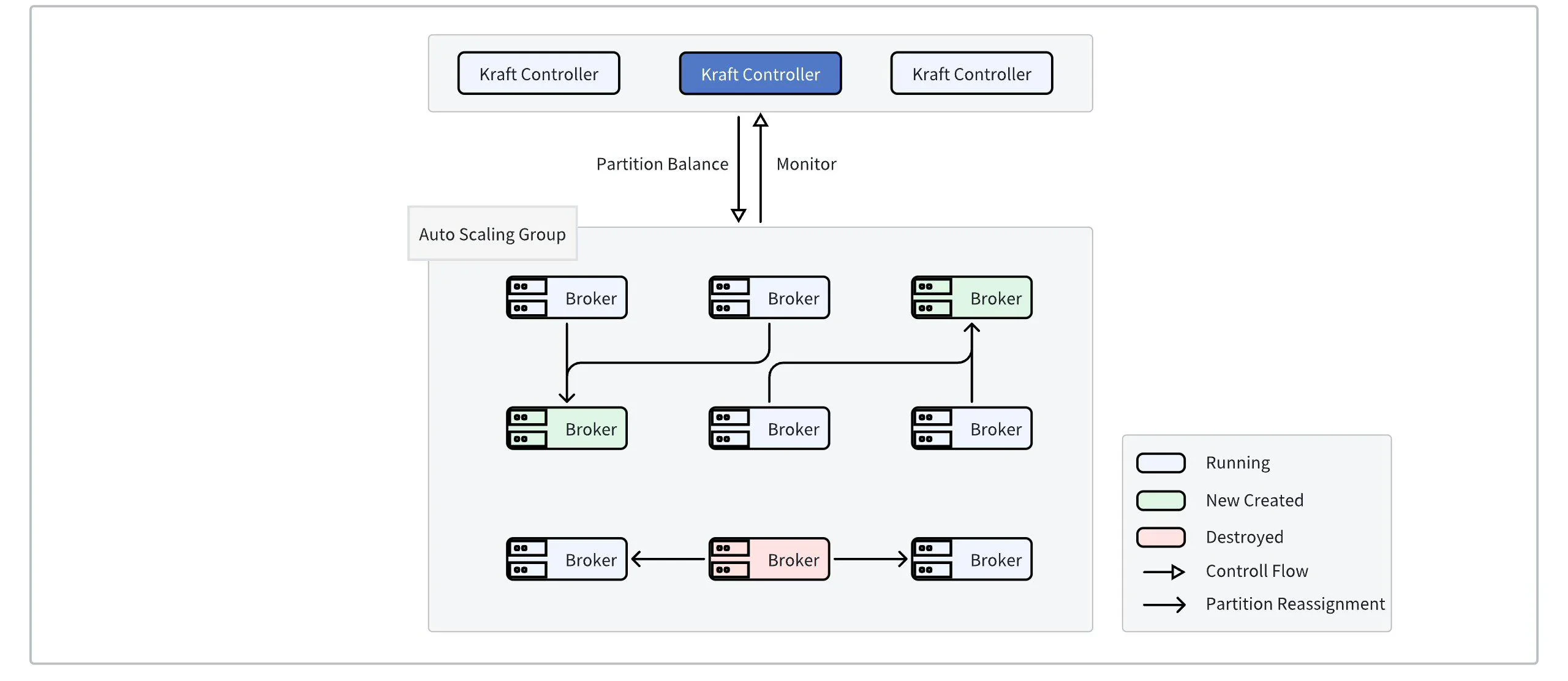 AutoMQ 秒级扩缩容的特性依赖一个原子能力,即秒级分区迁移(参考[秒级分区迁移▸](/zh/automq/architecture/technical-advantage/partition-reassignment-in-seconds))。
当借助弹性伸缩组 ASG 或者 Kubernetes 的 HPA\[3] 完成了节点的扩容后,这时仅需要将集群中的部分分区批量地迁移至新节点,即可完成流量的重平衡(参考[持续数据自平衡▸](/zh/automq/architecture/technical-advantage/continuous-self-balancing)),这往往能在十秒级完成。
### 触发扩容
以 AWS Auto Scaling Groups (ASG) 为例,通过配置流量阈值监控,当集群流量触及扩容阈值时,自动拉起新的 Broker 节点,此时 Controller 检测到流量存在不均衡,自动将分区移动至新创建的 Broker,完成流量的重新负载。
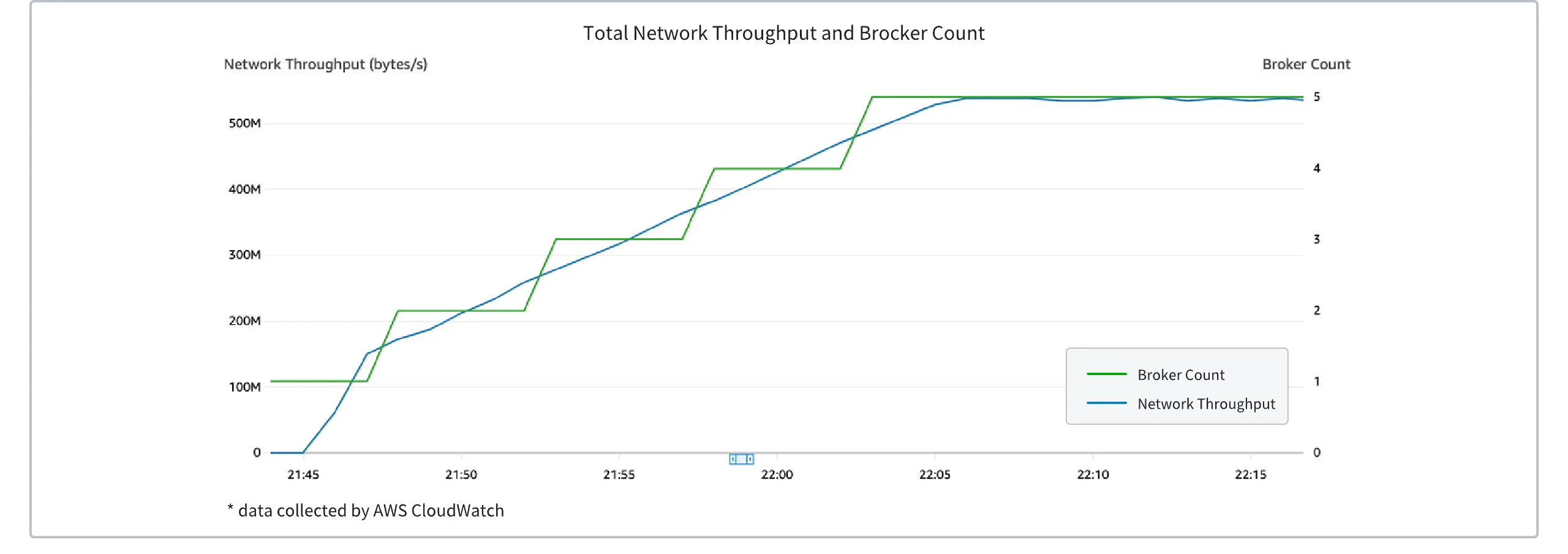
下图展示了一个 AutoMQ Kafka 集群的 Broker 数量随流量上涨发生的变化,可以看到随着流量的线性上升,Broker 被动态创建并加入集群平衡负载。
AutoMQ 秒级扩缩容的特性依赖一个原子能力,即秒级分区迁移(参考[秒级分区迁移▸](/zh/automq/architecture/technical-advantage/partition-reassignment-in-seconds))。
当借助弹性伸缩组 ASG 或者 Kubernetes 的 HPA\[3] 完成了节点的扩容后,这时仅需要将集群中的部分分区批量地迁移至新节点,即可完成流量的重平衡(参考[持续数据自平衡▸](/zh/automq/architecture/technical-advantage/continuous-self-balancing)),这往往能在十秒级完成。
### 触发扩容
以 AWS Auto Scaling Groups (ASG) 为例,通过配置流量阈值监控,当集群流量触及扩容阈值时,自动拉起新的 Broker 节点,此时 Controller 检测到流量存在不均衡,自动将分区移动至新创建的 Broker,完成流量的重新负载。
下图展示了一个 AutoMQ Kafka 集群的 Broker 数量随流量上涨发生的变化,可以看到随着流量的线性上升,Broker 被动态创建并加入集群平衡负载。
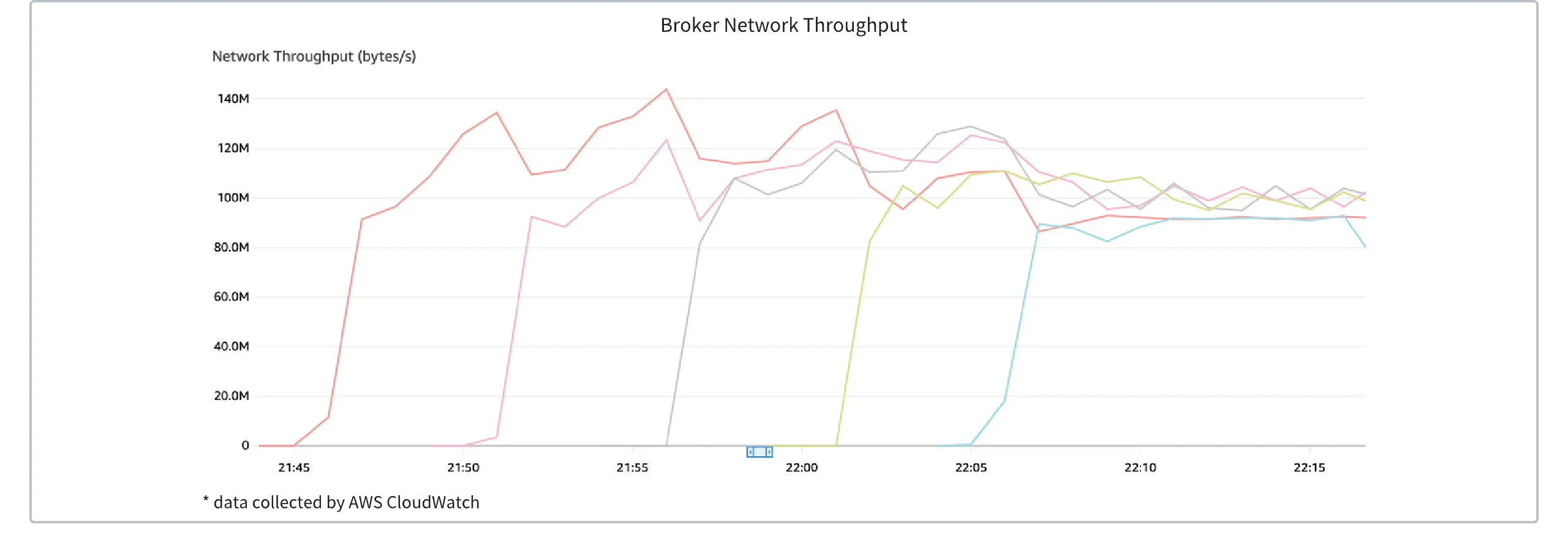
 下图展示了流量上涨过程中,各 Broker 节点的流量变化,可以看到新创建的 Broker 均在十秒级完成了流量的重新负载。
 ### 触发缩容
仍以 AWS Auto Scaling Groups 为例,当集群流量触及缩容阈值时,对即将缩容的 Broker 节点进行下线操作,此时该 Broker 上的分区将以 Round-Robin 方式在秒级内迁移至剩余 Broker 上,完成 Broker 的优雅下线及流量转移。
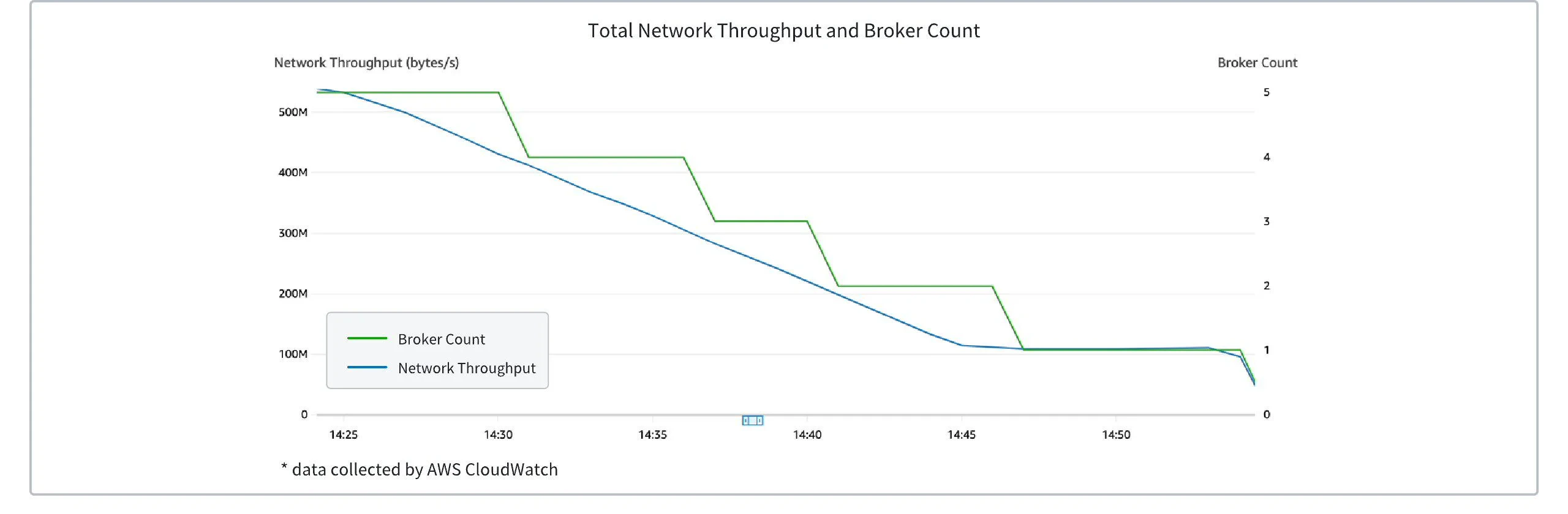
下图展示了一个 AutoMQ Kafka 集群的 Broker 数量随流量下降发生的变化,可以看到随着流量的线性下降,Broker 被动态下线节约资源。
### 触发缩容
仍以 AWS Auto Scaling Groups 为例,当集群流量触及缩容阈值时,对即将缩容的 Broker 节点进行下线操作,此时该 Broker 上的分区将以 Round-Robin 方式在秒级内迁移至剩余 Broker 上,完成 Broker 的优雅下线及流量转移。
下图展示了一个 AutoMQ Kafka 集群的 Broker 数量随流量下降发生的变化,可以看到随着流量的线性下降,Broker 被动态下线节约资源。
 下图展示了流量下降过程中,各 Broker 节点的流量变化,可以看到下线中的 Broker 的负载被转移到其余 Broker 上(每当 Broker 下线时,可观察到其余 Broker 流量有显著上升)。
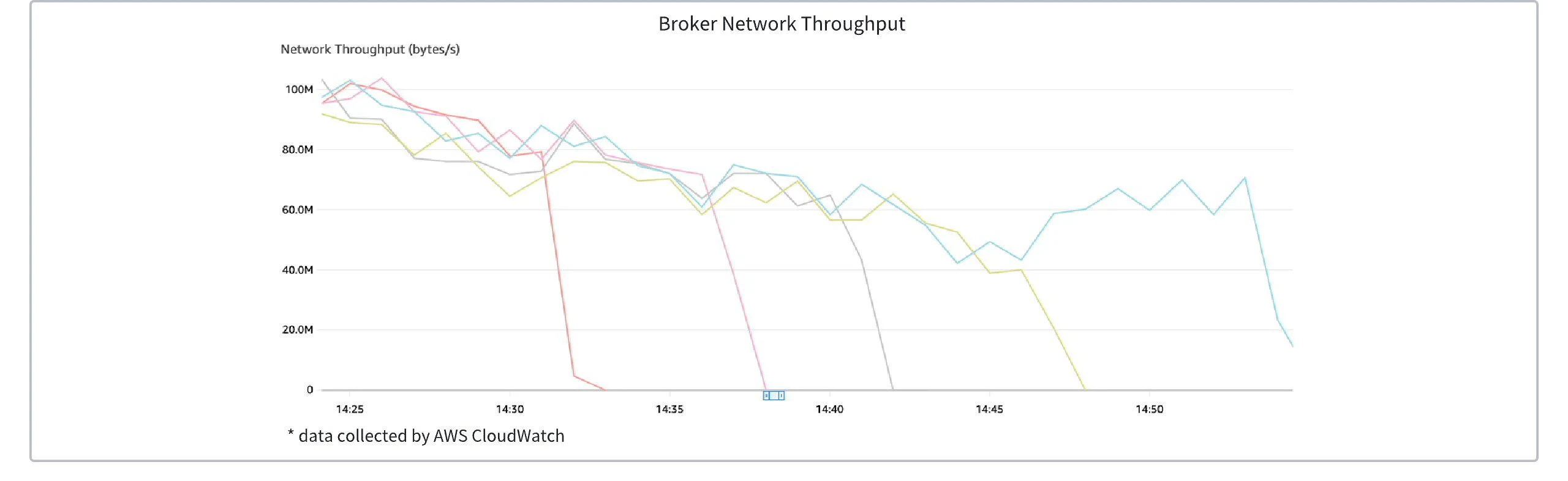 在上述示例中,为便于观察,人为增加了 ASG 的节点扩缩容冷却时间,并增加了进程启动和销毁延迟
## 自动扩缩容的优势
AutoMQ 的共享存储架构,天然支持快速自动扩缩容,也是实现 Serverless 的基础。AutoMQ 支持自动扩缩容后至少带来以下几个优势:
* 成本优势,无需按峰值准备资源,根据业务流量自动伸缩,有效应对潮汐型和突发型业务,按使用面积付费,无闲置资源浪费。
* 稳定性优势,扩容无损,不会对集群产生额外的流量压力,可以在高水位的状态下进行无损扩容。相反,Apache Kafka 的扩容是一个高风险操作,只能在低水位的情况下进行扩容。
* 多租户优势,具备自动扩缩容能力的集群,不在需要通过将业务混部来提高资源的利用率,完全可以为每个业务配置一个独立的集群。每个独立的集群根据自身的流量模型独立扩展即可。既保障了成本优势,又避免了某个业务出问题时带来全局的影响。
## 引用
\[1]. AWS Auto Scaling Groups: [https://docs.aws.amazon.com/autoscaling/ec2/userguide/auto-scaling-groups.html](https://docs.aws.amazon.com/autoscaling/ec2/userguide/auto-scaling-groups.html)
\[2]. 阿里云 ESS 弹性伸缩组:[https://www.aliyun.com/product/ecs/ess](https://www.aliyun.com/product/ecs/ess)
\[3]. Kubernetes 用于扩容的 HPA 组件:[https://kubernetes.io/docs/tasks/run-application/horizontal-pod-autoscale/](https://kubernetes.io/docs/tasks/run-application/horizontal-pod-autoscale/)
在上述示例中,为便于观察,人为增加了 ASG 的节点扩缩容冷却时间,并增加了进程启动和销毁延迟
## 自动扩缩容的优势
AutoMQ 的共享存储架构,天然支持快速自动扩缩容,也是实现 Serverless 的基础。AutoMQ 支持自动扩缩容后至少带来以下几个优势:
* 成本优势,无需按峰值准备资源,根据业务流量自动伸缩,有效应对潮汐型和突发型业务,按使用面积付费,无闲置资源浪费。
* 稳定性优势,扩容无损,不会对集群产生额外的流量压力,可以在高水位的状态下进行无损扩容。相反,Apache Kafka 的扩容是一个高风险操作,只能在低水位的情况下进行扩容。
* 多租户优势,具备自动扩缩容能力的集群,不在需要通过将业务混部来提高资源的利用率,完全可以为每个业务配置一个独立的集群。每个独立的集群根据自身的流量模型独立扩展即可。既保障了成本优势,又避免了某个业务出问题时带来全局的影响。
## 引用
\[1]. AWS Auto Scaling Groups: [https://docs.aws.amazon.com/autoscaling/ec2/userguide/auto-scaling-groups.html](https://docs.aws.amazon.com/autoscaling/ec2/userguide/auto-scaling-groups.html)
\[2]. 阿里云 ESS 弹性伸缩组:[https://www.aliyun.com/product/ecs/ess](https://www.aliyun.com/product/ecs/ess)
\[3]. Kubernetes 用于扩容的 HPA 组件:[https://kubernetes.io/docs/tasks/run-application/horizontal-pod-autoscale/](https://kubernetes.io/docs/tasks/run-application/horizontal-pod-autoscale/)