In this document, references to the AutoMQ product service provider, AutoMQ service provider, and AutoMQ all pertain to AutoMQ HK Limited and its subsidiaries.
Operational Flow
Step 1: Prepare an Azure virtual network (VNet)
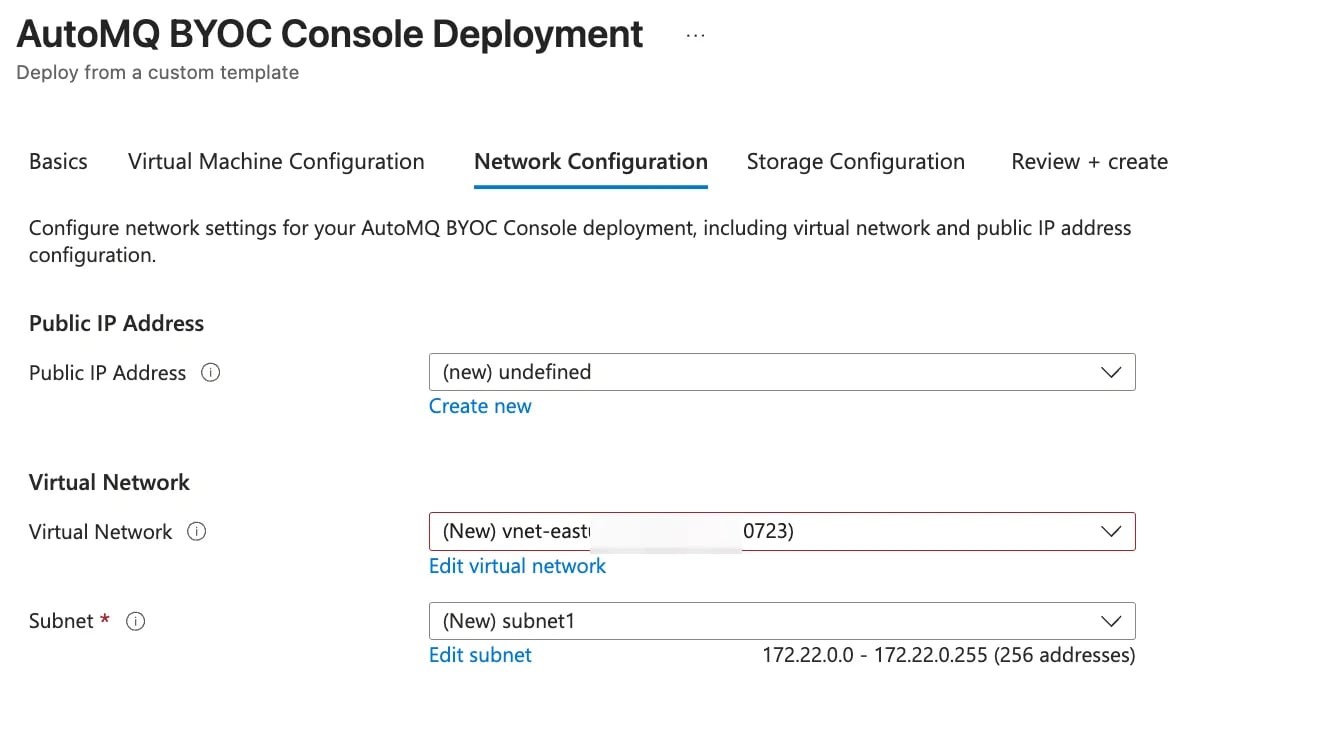
The AutoMQ BYOC environment is deployed within the user’s Virtual Network to ensure data privacy and security. When installing the AutoMQ environment, users must specify the Virtual Network and subnet information, and ensure that the Virtual Network meets the following conditions:-
Subnet CIDR requirements: The subnet must provide at least 512 IP addresses. A subnet CIDR block of
/23or larger is recommended so that the AutoMQ data plane has sufficient addresses for deployment and scaling. - Configure Public NAT Gateway for Access to Public Services: AutoMQ requires access to public services like image repositories. Therefore, the subnet where AutoMQ resides needs to be configured with a public NAT gateway.
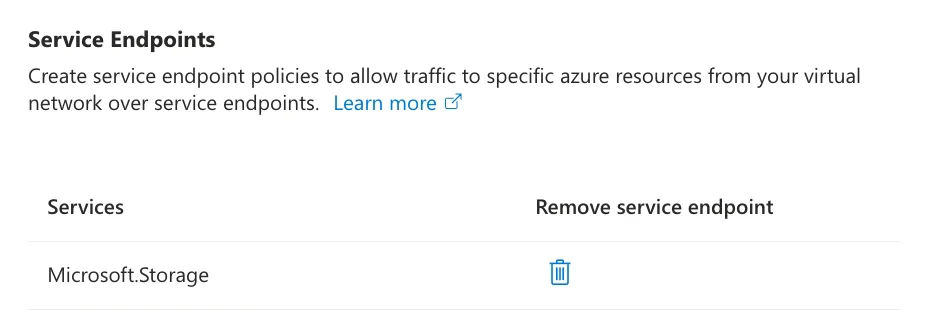
- Configure Storage Service Endpoint: AutoMQ requires access to the Azure Storage service, which necessitates configuration of the Service Endpoint. This allows access to object storage services through a private network, thereby avoiding unnecessary public traffic costs. Please refer to the appendix at the end of this document for configuration methods.
Step 2: Install AutoMQ Using ARM Templates.
- Visit AutoMQ Installation Link, to open the installation interface. The AutoMQ Cloud BYOC environment is installed on Azure by default through an ARM template.
- Refer to the parameter description below to set the appropriate Basics parameter values.
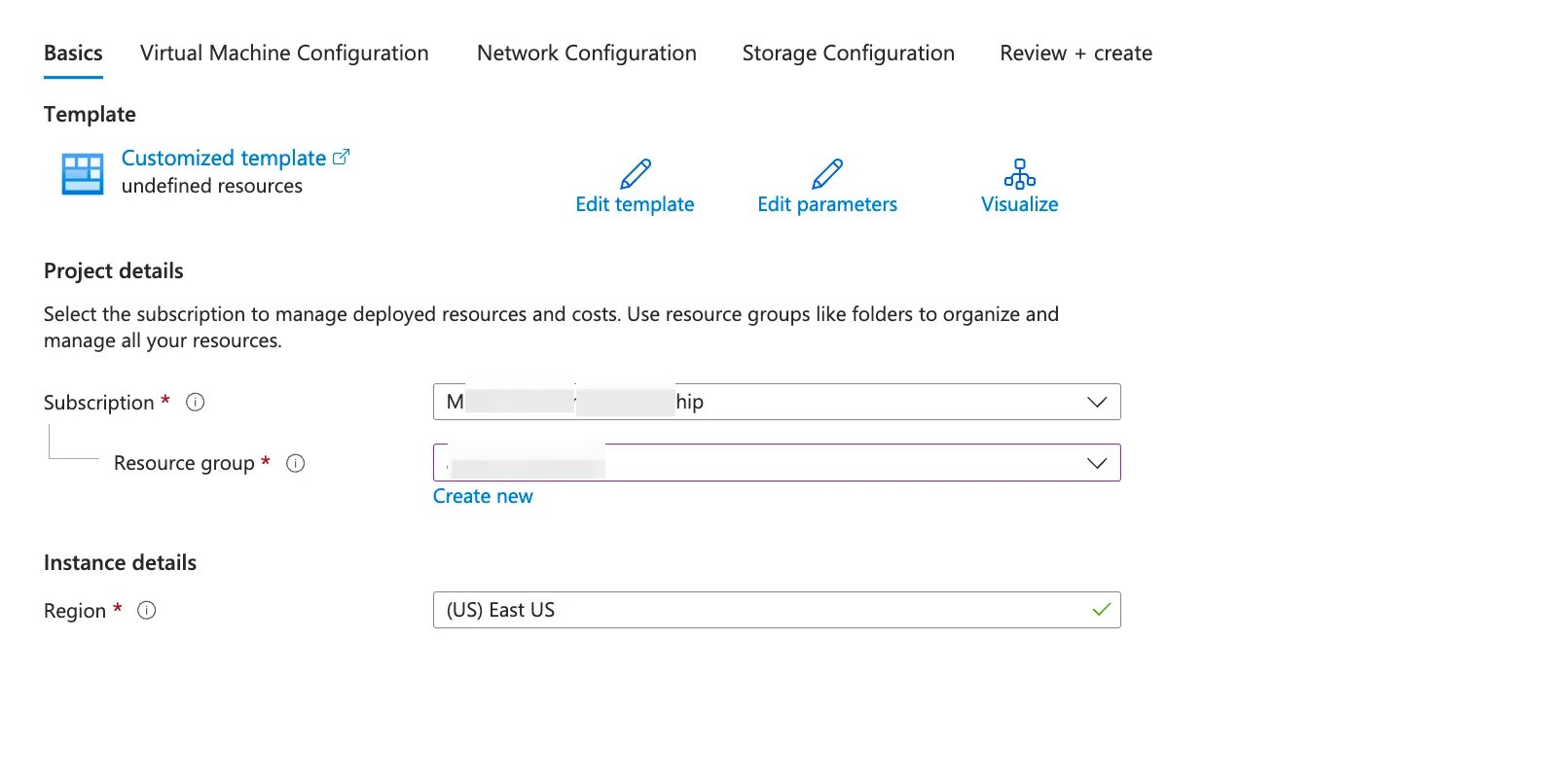
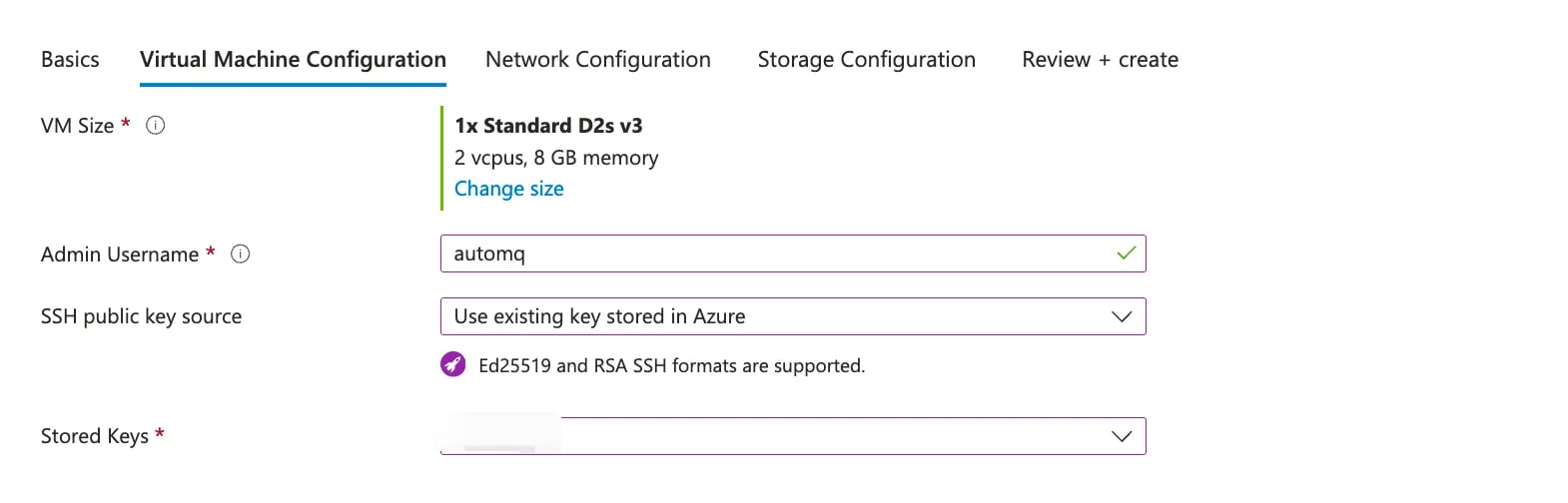
- Refer to the parameter descriptions below and set appropriate values for the Virtual Machine Configuration parameters.
- Refer to the parameter descriptions below to appropriately configure Network Configuration parameter values.
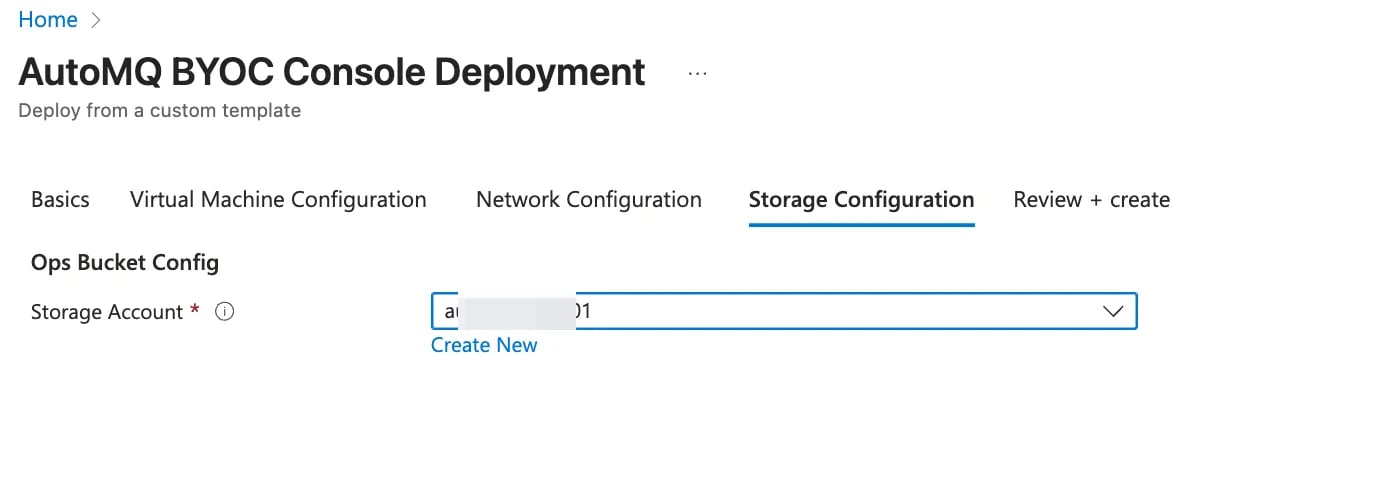
- Refer to the parameter descriptions below to set suitable Storage Configuration parameter values.
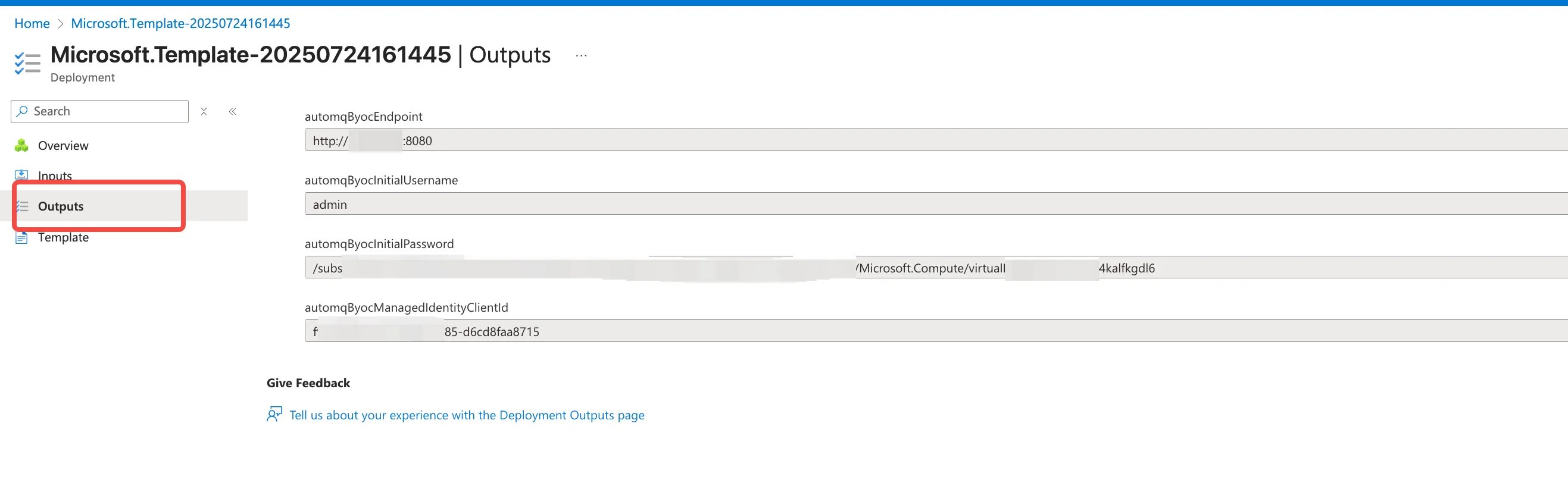
- Preview the configuration and create it. View the initial account passwords and console address output on the console.
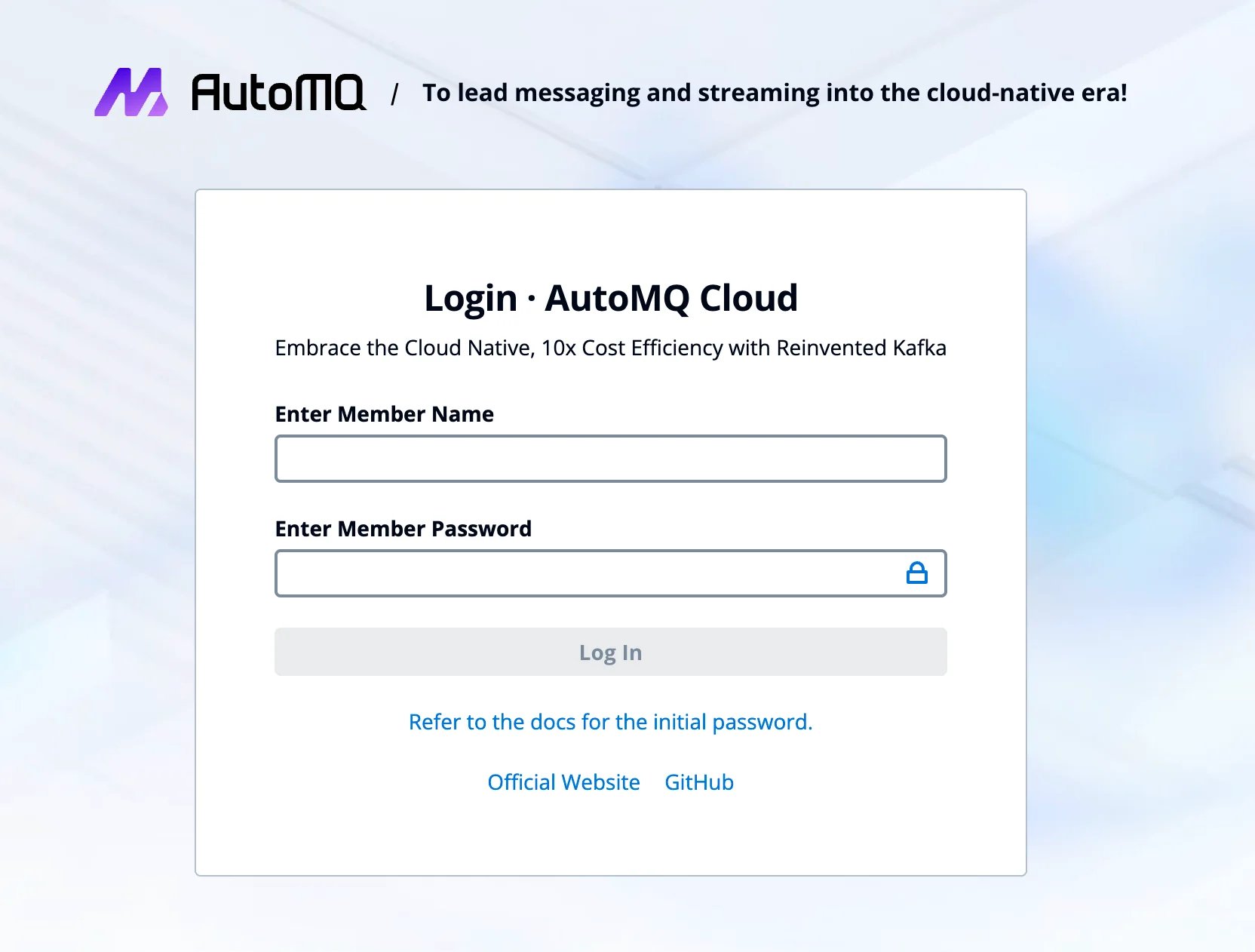
- Use the information above to sign into the AutoMQ console.
Step 3: Complete Operations Authorization for BYOC Environment
The BYOC environment is deployed in your virtual network (VNet), which isolates application data within your network. The environment also generates operational logs, metrics, and diagnostic data. After installation, follow Operations authorization overview to grant the permissions required for AutoMQ to monitor service health and perform managed recovery operations.Next Steps
AutoMQ only supports deployment on an AKS cluster in Azure. Therefore, once the environment installation is complete, users must first prepare the AKS cluster and then configure it in the AutoMQ console to deploy the AutoMQ cluster to AKS. Prepare AKS and complete the subsequent deployment documentation. Please refer to Deploy to Azure AKS▸.Appendix
Configure Virtual Network and Subnet
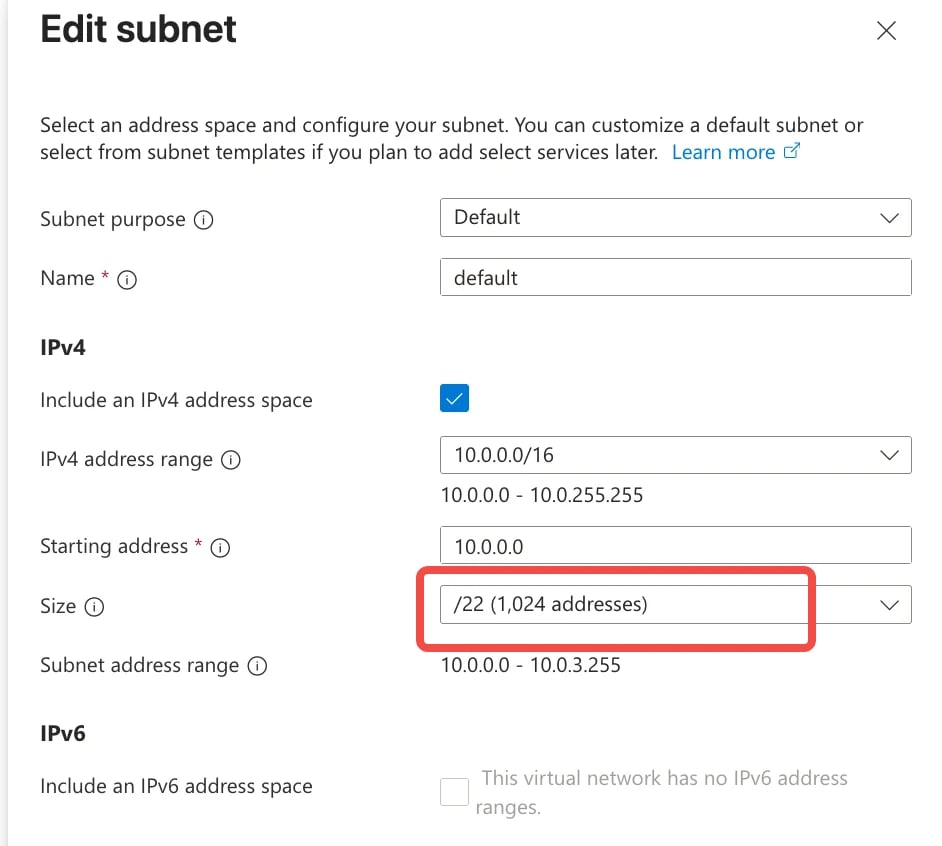
Configure the Subnet, Ensuring There Are Enough IP Addresses Available.
When you create the subnet in the Azure portal, configure a CIDR block that provides at least 512 IP addresses. A/23 or larger subnet is recommended.
Configuring a Subnet to Enable NAT Gateway for Accessing Public Services
Users can enable the NAT Gateway during the creation or editing of a Subnet in the Virtual Network console.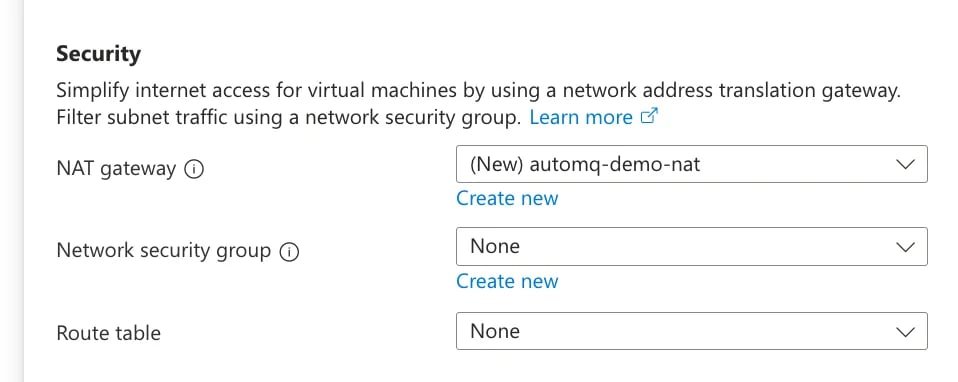
Configure a Subnet to Enable a Storage Service Endpoint for Accessing the Blob Storage Service.
AutoMQ requires access to Azure Storage Service; therefore, all Subnets deploying AutoMQ must have the Storage Service Endpoint enabled. Refer to the diagram below and selectMicrosoft.Storage.